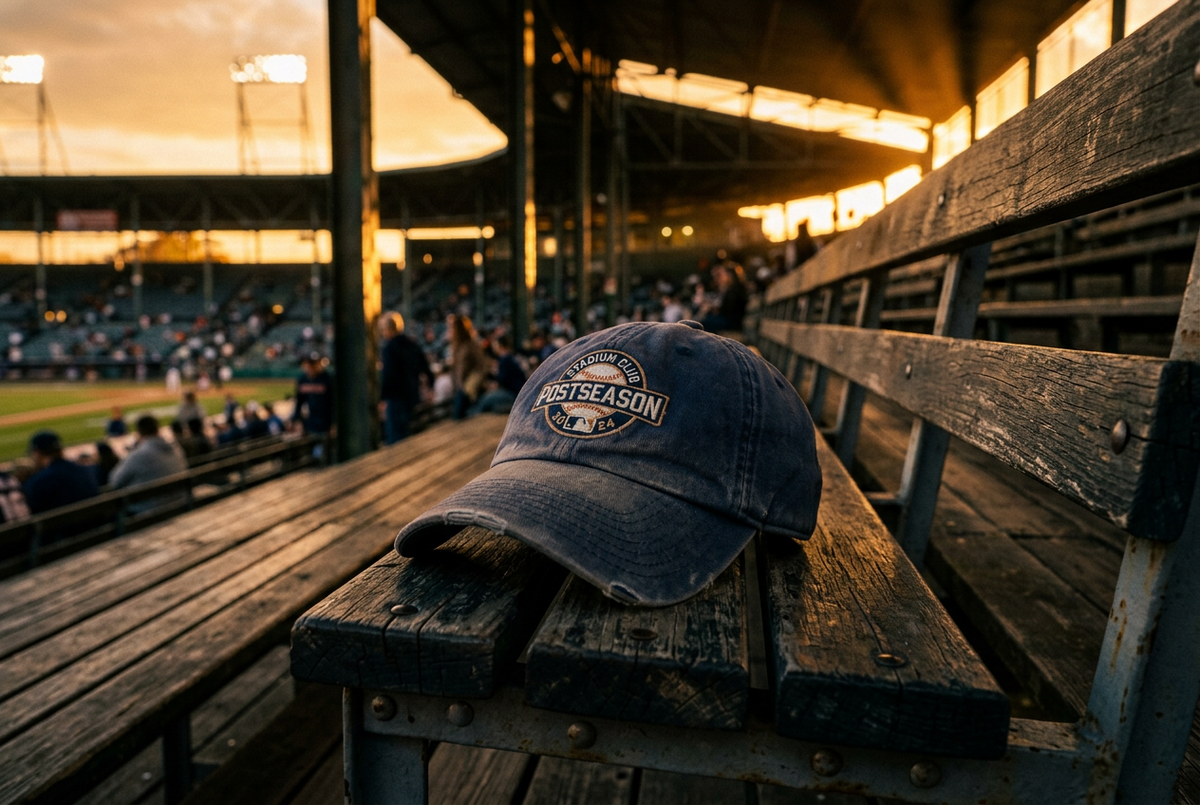

The Kentucky Derby gets the hat photos. Big brims, bright colors, straw in the May sun. That's the picture most people have of hats at the track.
The Breeders' Cup is the other one. Friday and Saturday, October 30 and 31, at Keeneland in Lexington. Two days, fourteen races, a seven million dollar Classic on Halloween. And it's the end of October in Kentucky, which changes the hat completely.
Straw goes home after summer. That's the old rule, and most hat people still live by it. What comes out instead is felt. Fedoras. Wool. A brim that can handle a cold morning and a gray afternoon.
If you've got a felt hat coming out of the closet this week, for the track or just for the season, here's how to treat it right.
First, a Detour: The Cap You Can't Buy
Before the care part, one of our favorite hat details in all of sports.
The Breeders' Cup has a purple cap. It isn't on a rack in the gift shop. It goes to the connections, the owners and trainers and people behind the horses that made the field. You get one because your horse got in.
That's why they become collectibles. A charity called After the Finish Line has auctioned them on eBay for years, including 115 purple hats from the 2022 Cup at Keeneland, with the money going to retired racehorses.
Same logo anyone can see. One way to earn it.
Okay. Back to your felt.
Brush It Like You Mean It, Not Like a Frying Pan
Felt holds onto dust. It's built that way. The good news is a brush is usually all it needs.
The bad news is most people brush wrong. Back and forth, hard and fast, like they're scrubbing a pan. That drags dirt across the surface instead of lifting it.
Here's the method hatters have used for generations:
- Dry hat only. If it's damp, wait. Brushing a damp hat works dirt in instead of lifting it off.
- Soft bristles. A stiff wire brush can tear felt.
- Counterclockwise around the crown. Light strokes, one direction, all the way around. Then the brim, top and underside.
- Leave the sweatband alone. That's a different job.
Here's where we get practical for a second. The Fresh Halo® Hat Brush is soft-bristle and gentle on fabric, made for lifting dust and debris off most hat types. Five light passes after a long day out is the whole routine.
How You Set It Down Matters
Felt keeps the shape it rests in. That's the thing most people don't know until a brim goes flat on one side.
Pick it up by the brim, front and back, not by pinching the crown. Hatters will tell you the pinch is where years of grabbing show up first.
When it comes off, give it somewhere it can sit without the brim taking the weight. Right side up with the brim hanging over the edge of a shelf works. A hook works. A hat box works best for the long stretch.
Ask anybody who has found a flat brim in March.
When It Rains at the Track
It will. Late October, two days outside, you're getting some weather.
Felt soaks up rain. It's going to happen. What matters is how it dries.
- Shake it off and pat it with a towel. Don't rub.
- Soft felt (a snap-brim fedora): set it on a towel on a flat surface, brim snapped up. Don't rest a soaked soft hat on its crown and don't flip the sweatband out, or the brim will droop as it dries.
- Firm felt (a Western): drape a towel over the arm of a chair and let the brim hang over the sides, so it dries in its own shape instead of the shape of the table.
- No heat. Not the dryer, not the radiator, not the car vent. Let it air dry overnight.
Once it's fully dry, brush it. Counterclockwise. You know the drill now.
Between Wears
A felt hat in rotation once or twice a week mostly needs three things: a brush after wearing, a place to rest that doesn't fight the brim, and air.
That last one is easy to skip. A hat that goes straight from your head into a closed box after a long day doesn't get the chance to breathe. Give it an hour on the hook first.
And look at the sweatband once in a while. It's the part of the hat that works hardest and gets checked least.
The Real Point
Straw has the summer. Felt has everything else.
A good felt hat isn't fussy. It just wants a light hand, a soft brush, and somewhere decent to sit. Do those three things and the hat you wear to the track this fall is the same hat you wear next fall.
So here's the question. What's the hat you'd wear to the track, and is it earned or bought?
Stay fresh.