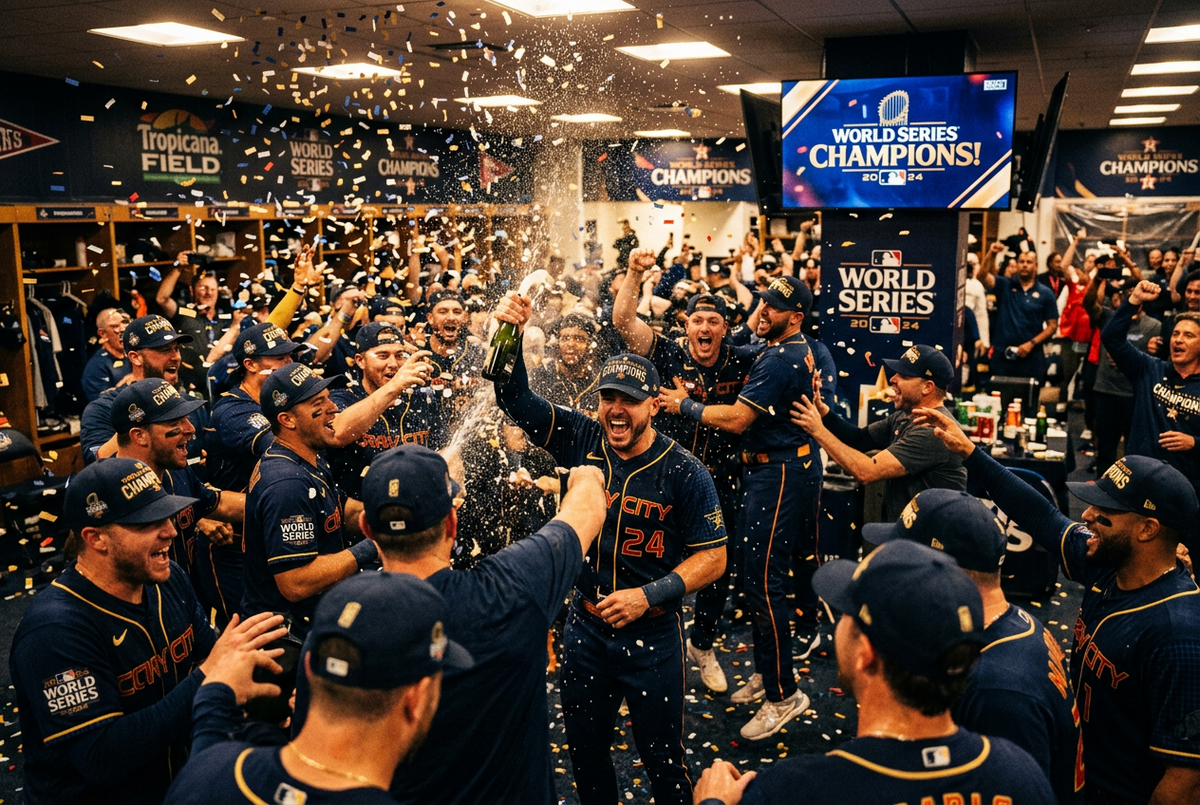

On Wednesday night at Tropicana Field, Trevor Megill got a ground ball to second, Brice Turang threw to first, and the Milwaukee Brewers won the first World Series in franchise history. Within minutes there were caps on every head in the visiting clubhouse. Locker-room caps that said what nobody in Milwaukee had ever been able to buy.
Here's the thing most people miss. Those caps were sitting in a box in that building before the last out. So was another box, for the other team.
The cap that shows up before the result
Every World Series, the league has official locker-room caps and shirts made for both teams ahead of time. It has to. The players want them on the field in the first five minutes, and team shops want them on shelves by morning. You can't print that fast. So you print both.
That means there was a Tampa Bay Rays 2026 World Series Champions cap. Real thread, real logo, real date. It just didn't get to mean anything.
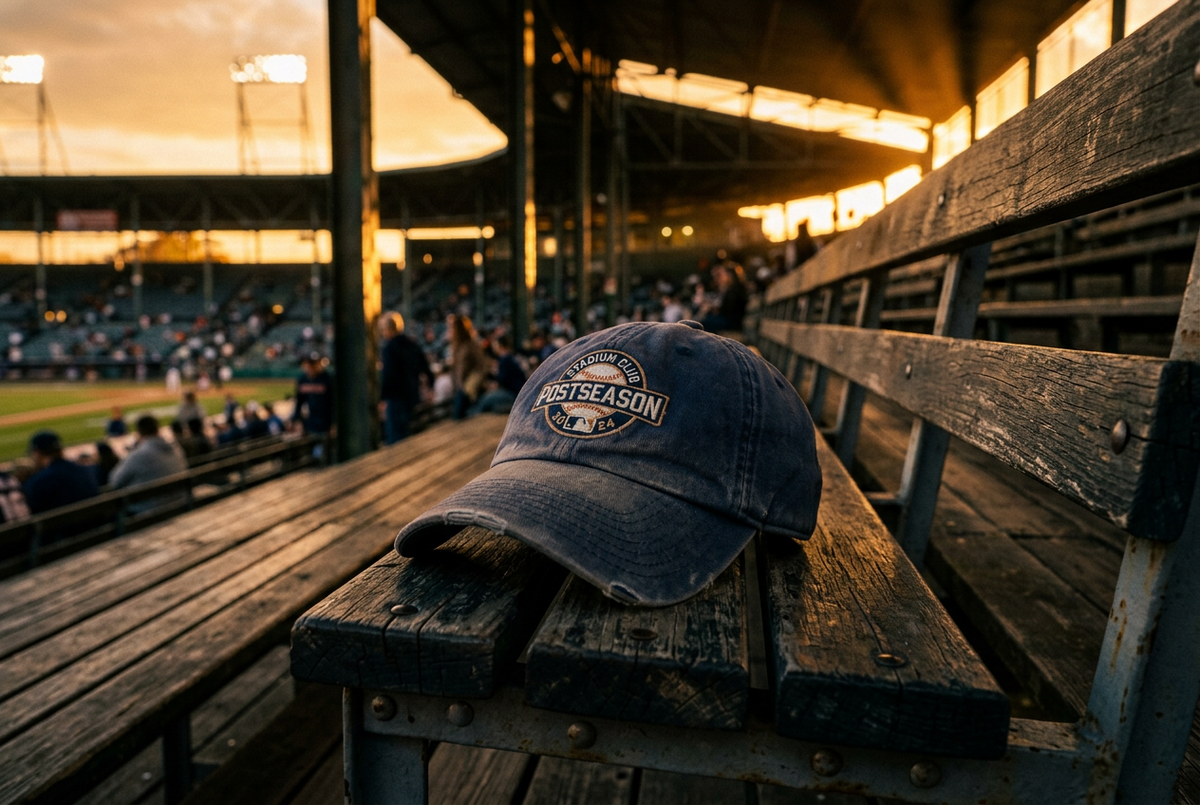
For the Brewers, the timing matters more than usual. Milwaukee's only other trip to the Series was 1982, a seven-game loss to St. Louis. Forty-four years later, a city that has worn the ball-in-glove logo through a lot of patient Octobers finally gets a champions cap of its own. The first one ever made.
Three weeks ago, before either team had clinched a pennant, we pointed out that neither a Brewers nor a Rays champions cap had ever existed. Now one does. The other got made anyway.
Where the other set goes
The losing team's gear doesn't get destroyed, and it doesn't get sold. Since 2017, MLB has run that inventory through Good360, a nonprofit that places surplus goods with vetted charities. Shops and clubs pull the gear, it gets collected in the days after the Series, and it ships out by mid-November.
Good360 says the items can't be resold, and they're placed so they don't undercut local businesses. Last year's batch, the Toronto gear from the 2025 Series, was headed to the Caribbean, Central America, South America, East Africa and Cambodia. Before that program, losing Super Bowl gear went through World Vision. A World Vision staffer told the New York Times back in 2007: "They wouldn't know who won the Super Bowl."
Which is kind of the point. A cap that was supposed to mark the best night of a fan's life becomes a plain good cap on somebody who needs one. No story attached. Just a hat doing a hat's job.
Hat people, right? We're the only ones who'd lose sleep over where a cap ends up.
One cap goes to Cooperstown
The morning after the clinch, the Hall of Fame announced a list of Brewers artifacts headed to Cooperstown. Yelich's Game 4 jersey. Contreras's catching gear. Aaron Ashby's glasses. And Jacob Misiorowski's cap from Game 5.
Think about that for a second. Out of everything a championship leaves behind, one of the pieces that gets saved for good is a cap that a pitcher sweated through on the biggest night of his career. Not a fresh one off the rack. That one.
That's what makes caps different from almost anything else a fan collects. A jersey hangs. A ticket stub goes in a drawer. A cap goes on your head and starts keeping score. The brim takes the shape of how you hold it. The band takes everything else.
If you just got one
Here's where we get practical for a second, because a lot of people in Wisconsin just bought a cap they plan to keep for 40 years.
If it's going on a shelf, keep it out of direct sun and let it sit crown up so the shape holds. If it's going on your head, and it should, set it up before the first wear. A cedar Hat Strip slides inside the sweatband, cedar facing your head, and helps reduce odor and sweat stains for three to six months. Do it on day one, not after the parade.
And if you're the superstitious type who refuses to touch a cap during a run, we've already written about how to keep a lucky cap in rotation without breaking the streak. The run's over. You're allowed to take care of it now.
The cap is the part you get to keep
The ring goes to the players. The trophy goes to the building. The banner goes up next spring. For everybody else, the champions cap is the piece of it that comes home.
This year, in one city, that cap exists for the first time. In another, a box of the same cap with a different logo is on its way somewhere that never watched a pitch.
Both of them will get worn. Only one of them will get explained.
Which cap in your rotation marks the year it finally happened?
Stay fresh.