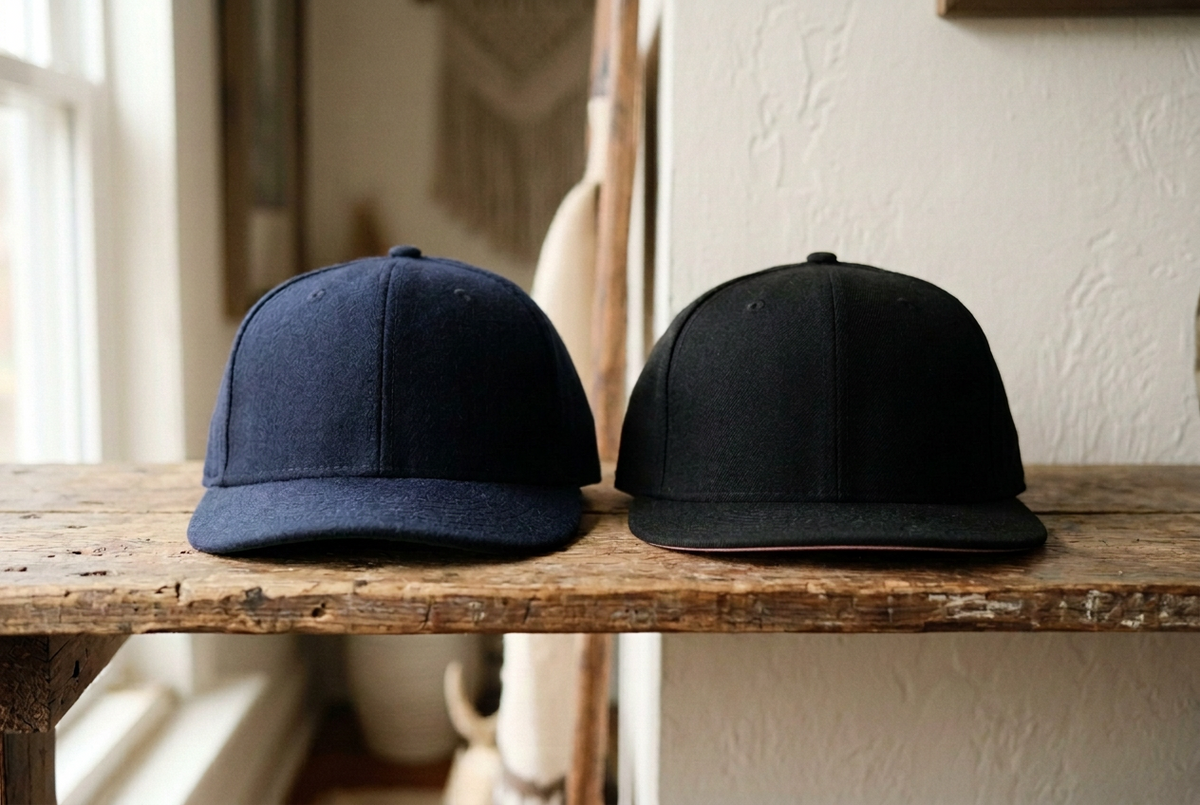

Put two collectors in front of two walls of fitteds. Same number of caps, same care, same money spent.
One wall is a life story. Every team on it is a team that person has yelled at a TV for. The other wall is a gallery. Half the teams on it, the owner couldn't name the starting shortstop for, and they don't care. They bought the cap because of the undervisor.
Both walls are real. Both collectors think the other one is doing it wrong. Here's how we got two kinds of collector in the first place.
For most of its life, a fitted was a uniform
The 59FIFTY was born in 1954 as the cap teams wore on the field. It didn't go on sale to the public until 1980, and in 1993 it became MLB's official on-field cap. For decades, buying a fitted meant buying your team in your team's colors. There was no other option on the wall.
That changed with one phone call. In 1996, Spike Lee wanted a red Yankees cap for the World Series. The Yankees didn't wear red, and an exception had to be worked out to make it. We told the whole story in our piece on the red Yankees cap at 30, but here's the part that matters for this one: after that cap, custom requests took off. For the first time, a fitted could be about the look, not the uniform.
Then the bottom of the brim changed color
If you want to know where the colorway collector really comes from, look under the brim.
The undervisor was green for most of the cap's history. The Reds switched to gray in 1990 and won the World Series that year, and gray followed. Collectors still argue about green versus gray like it's a family feud.
Then in 2019, a customer walked into Hat Club and asked for a Yankees cap with a pink undervisor. Hat Club turned it into a full pink-bottom collection that fall, and according to Business of Fashion the line outside ran past 100 people. A color nobody would ever wear on the field, hidden under the brim, and people waited on a sidewalk for it.
That's the colorway collector's whole point. The logo is part of the art. The patch, the undervisor and the color block are the reasons to buy.
Drops turned it into a calendar
Once stores started building their own colorways with New Era, the fitted became a drop. New Era told Business of Fashion that fitted sales in New York City topped 900,000 units in 2020, up 257% from the year before. Lids launched its own online drop site in February 2022, with releases on Fridays at 11 a.m. Eastern, and opened a store in Queens built around it.
Hat Club is still doing it this month. Its Cookies and Cream collection has a black crown and upper visor, a pink undervisor and a full-color side patch. Nobody buys that cap to tell you who they root for. They buy it because it looks like that.
The case for each wall
The team collector: a cap is a statement. You're wearing a city, a season, a player you watched come up through the minors. A team you don't follow on your head is a costume. Every cap should come with a story you can tell.
The colorway collector: the logo is a canvas, and the people who design these caps are artists. A side patch is a story too, just about a year instead of a person. Why should a great design be off limits because of where you grew up?
Where do we land? Keith is team, every time. If he doesn't root for them, they don't go on his head. But he'll admit that some of the best caps out there belong to teams nobody wearing them roots for.
Either way, the wall gets worn
Here's where we get practical for a second. Team wall or colorway wall, the caps that get worn the most are the ones that need the most from you. A rested cap, a dry crown and a cedar Hat Strip in the sweatband (cedar faces your head) help fight odor, whichever logo is on the front. That's the one thing both walls agree on.
So which kind of collector are you? And if you're team, what's the one cap on your wall you bought just for the design?
Stay fresh.